
A Value-Based Model that Drives Real Outcomes in Primary Care
DOWNLOAD AS PDF 30 MIN READ
Welcome to VItalSync Health Health, your trusted partner in revolutionizing primary care delivery.
We’re a Premier Care Management firm dedicated to guiding independent physician practices, health systems, employers, and payors through a seamless transition from the traditional, fragmented fee-for-service model to a cutting-edge, value-based care approach.
Redefining primary care: VitalSync Health's model prioritizes patients, employing a team-based approach anchored by physicians. Includes care management, navigation, community health workers, population health, and clinical pharmacy.

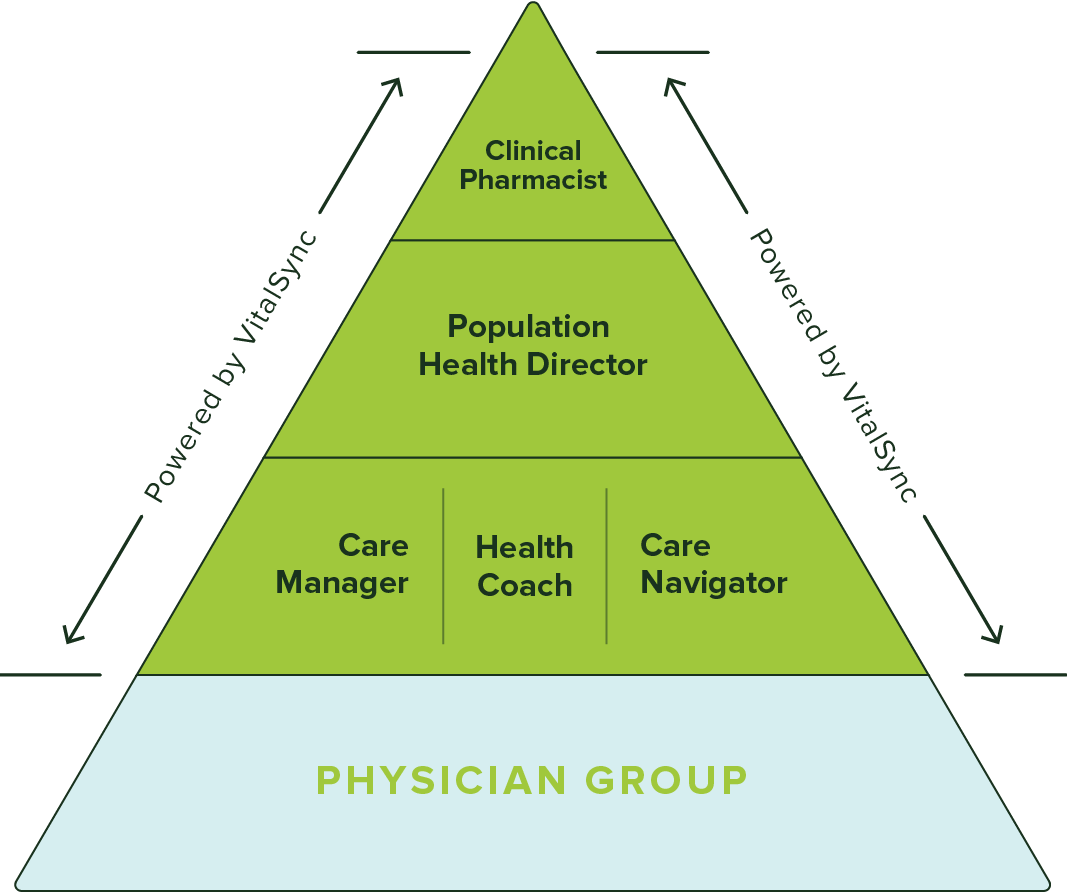
Committed partners strive for TRIPLE AIM: improve patient outcomes, employ effective population strategies, and reduce care costs. Our innovative model extends Primary Care nationally, enabling groups to transform healthcare and reshape the primary care paradigm.
Advanced Primary Care is a health care delivery model that prioritizes strong relationships between patients and their doctors with additional support from data, analytics and coordinated care.

APC is a practice that shifts the focus of primary care toward quality. Instead of focusing on numbers, APC ensures patients are provided with high-quality care.
APC frees healthcare providers from traditional time constraints by reducing the necessity to see a large number of patients. The impact of advanced primary care is crucial for patients dealing with the intricacies of healthcare.

The following five capabilities play a crucial role in the model’s ability to deliver improved health outcomes at a lower cost. Let’s take a deeper look:
We extend your practice’s capabilities by integrating a state-of-the-art, team-based approach.
Navigating patient care with a tailored approach.
Ensuring the provision of quality care, addressing chronic conditions, implementing remote patient monitoring, annual wellness visits, integrating behavioral health, and fostering overall well-being. All these efforts are orchestrated collaboratively among the care team, creating a seamless and patient-centered experience.
An “extra hand” that works with the care manager to Identify and address Social Determinants of Health (SDoH) and guiding patients through insurance and healthcare navigation. Care navigation is apatient-centered approach aimed at assisting individuals in accessing and coordinating healthcare services efficiently and effectively. It involves guiding patients through the complexities of the healthcare system, helping them overcome barriers to care, and empowering them to make informed decisions about their health.
Here are 4 ways care navigation contributes to value-based care:
Population Health Directors: Utilizing proactive data analytics to identify and triage at-risk patients. Population health management is a proactive approach to improving the health outcomes of a defined group or population. It involves analyzing health data, identifying health needs and disparities, implementing interventions to address those needs, and measuring outcomes to continuously improve care delivery and health outcomes at the population level.
Every population can be broken down into three general segments:
Community health work involves engaging with individuals and communities to promote health, prevent disease, and address health disparities. These workers are often from the communities they serve, which allows for culturally sensitive and tailored approaches to health promotion and education.
Here are 4 ways community health workers contribute to value-based care:
With 80% of chronic conditions managed through therapeutics, it makes sense to have a pharmacist on the care team, optimizing medication therapy and overseeing drug interactions. Clinical pharmacy is a specialized field of pharmacy practice that focuses on the direct provision of patient care, collaborating with healthcare providers to optimize medication therapy outcomes. Clinical pharmacists work closely with physicians, nurses, and other healthcare professionals to ensure safe, effective, and appropriate medication use for individual patients.
Here are 3 ways clinical pharmacists contribute to value-based care:
True APC is a model where everyone wins: providers, patients, payers, and employers.
APC isn’t just a model that works for patients and payers. It is also a model for those who deliver care. There are three main reasons for this dynamic:
In the APC model, financial incentives are provided for the quality of care provided, not just reimbursement for procedures. As a result, a provider can expect to generate net new revenue from the enhanced care provided by the APC extended team.
Payers looking to build a competitive advantage in their markets set themselves apart from their competitors in five specific ways when they implement APC:
Payers looking to build a competitive advantage in their markets set themselves apart from their competitors in five specific ways when they implement APC:
Self-insured employers get four key benefits from APC:
The landscape of healthcare is evolving rapidly, with Advanced Primary Care (APC) at the forefront of this transformation. Stay ahead of the curve. If you’re interested in learning how the APC model can benefit you and your organization, we’re here to start the conversation. Let’s connect and explore the possibilities together.